

"I don't even look at applications anymore"
Why this is happening, and what to do about it


NextPath is here to help you find a job with less of a headache. The advice in these job seeking support posts come from hundreds of 1:1 sessions with job seekers who come to us to help them figure out how to navigate their search. If you’re looking for hands-on support, let’s talk.
The following is a conversation I have had literally dozens of times over the past year:
me: How many applications do you get for the roles you post each week?
them: About 800-1000 within the first 24 hours of posting the role, and then we take it down.
me: Too much volume?
them: Way too much.
me: And how do you sort through the applications?
them: I don’t. How could I? I don’t even look at them.
In fact, the title of this post came from another conversation I had where a candidate I found for a CEO mentioned they had applied directly on the company’s site.
In the age of AI, everything we know about hiring is changing. I’ve discussed previously how we can no longer use written word as a signal, so cover letters are out. And now, AI powered tools are automating the job search for many candidates, so being the first to apply no longer matters (because if everyone is the first, everyone is last).
Actions Have Reactions
When I hear from candidates that they aren’t hearing back from their applications, and blame the hiring teams for this, it’s clear they aren’t thinking of the whole story. To truly understand how hiring works, you need to think about it from the hiring team’s side. If they’re getting 1,000’s of applications, there’s no way to meaningfully sort through them. Which means the inbound application process is broken. When we can’t use inbound, we lean on outbound.
Most hiring teams have internal (or third party) sourcers. These sourcers are tasked with finding candidates for roles based on the information given to them by the hiring team. There’s pretty much one place to find candidates, and love it or hate it, that’s LinkedIn.
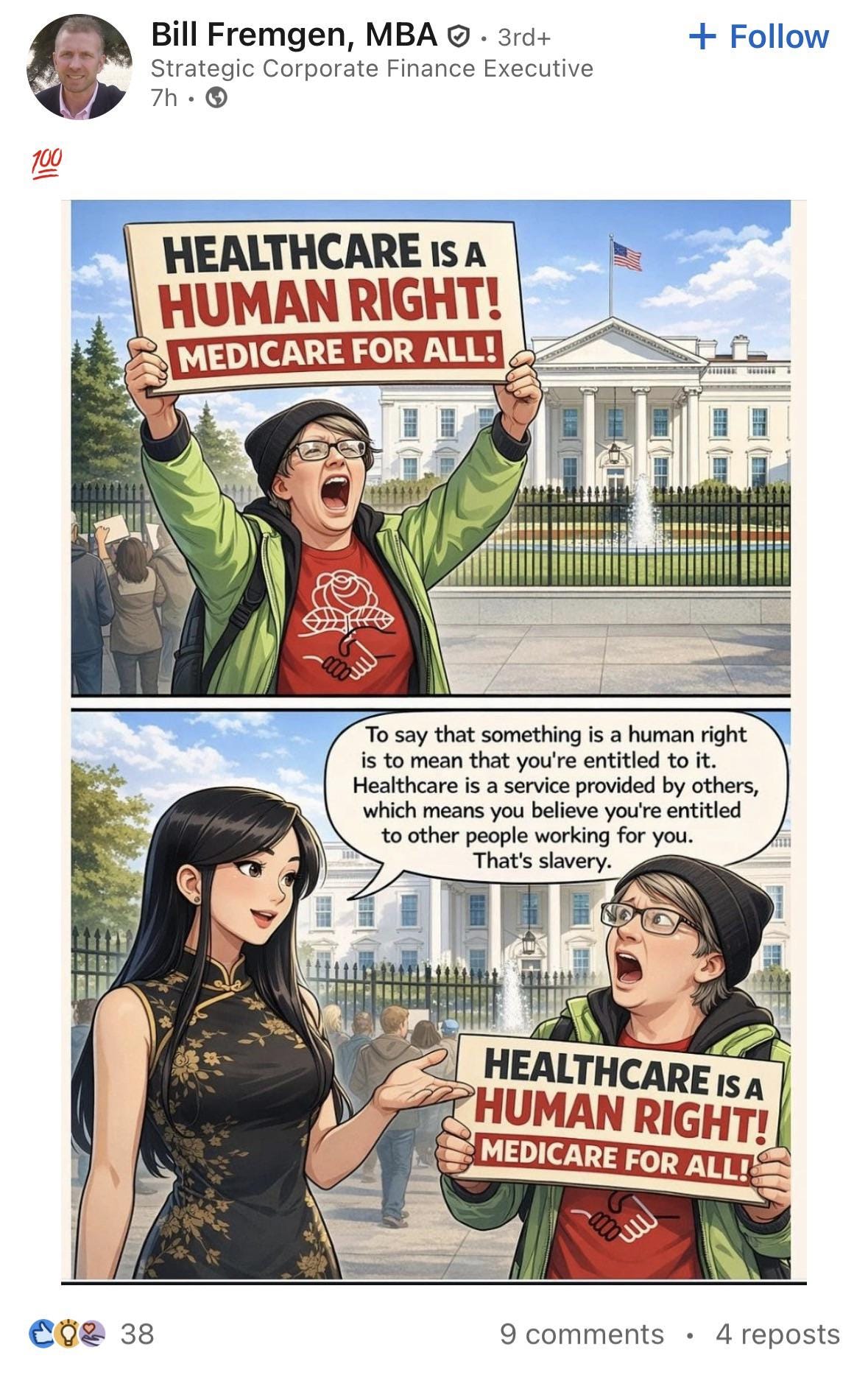
Yes, the same LinkedIn where you can find gems like this:
And if you’re saying but, but, I hate LinkedIn! I don’t want to use it, I don’t want to be on it! Then see above: Actions Have Reactions.
Recruiters use LinkedIn to find candidates, so if you want to be found, you have to appease the Almighty Algorithm. You don’t have to like it, but this is the way we attract the attention of the job market in 2026. That means being active on the platform:
You want to have at a bare minimum 500 connections, preferably over 1k. Everyone need this, so most people will accept your connection request no questions asked.
Like/Comment/Share posts that show up in your feed (you can start with mine if you’d like 💅). Do this every day.
Write your own posts, 1x/week. Don’t know what to post? Post anything: a picture of a pet, your hobby, something Claude wrote (remove the emdash first). Just keep it positive, you can be spicy when you run your own company.
Update your profile often. When you’re making little tweaks (changing wording, adding bullet points, updating your profile picture) the algorithm is pleased. We like when the algorithm is pleased.
Dear God, take down the green banner if you haven’t yet.
Lastly, and most importantly, respond to every single message you receive. The algorithm needs to know that if a recruiter who is paying for this service messages you, you’re going to reply. Otherwise they’re wasting time/money.
This is how you get found on LinkedIn. It doesn’t have to be a huge effort - most of my clients who spend just 15 minutes a day on the platform see a huge boost.
Applying isn’t a complete waste of time, but you’ll need to do more than just apply, and that’s where cold outreach comes in. That’ll be for another post, because first, you need to work on your LinkedIn.
Your Assignment
So here’s what you’re going to do. Do Everything I Just Told You To. Take 15 minutes every day for the next week, do your LinkedIn homework, and then you can put it down. Come back in a week, and tell me in the comments how it worked - you’ll have more views, and get more messages.
Can we talk about LinkedIn literally turning off the workaround to find jobs less than an hour old and how that plays into the resume overload?